
30 October 2026
Lupin photography Tekapo: your guide to summer blooms
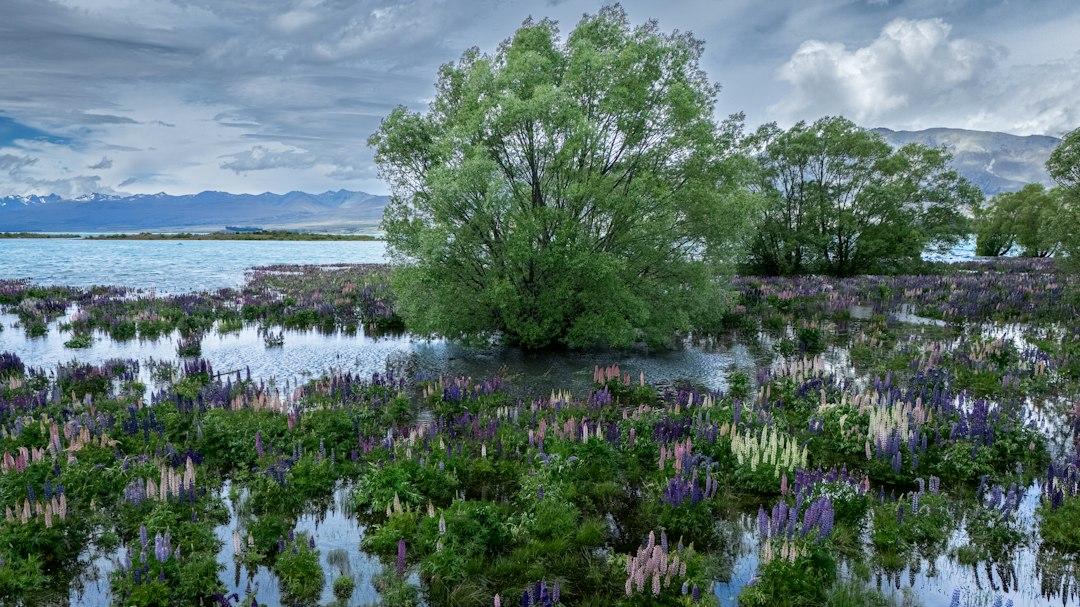
Lake Tekapo turns into one of the best spots in New Zealand for a few short weeks each summer, usually from late November through to late December, when the lupins open up along the lakeshore and the Mackenzie Basin roads. If you have never photographed them before, this is the year to try. The flowers only last a month or so before the colour fades, so a bit of planning goes a long way.
Get there early. The light at 6am is soft and low, and the lake is often glassy before the wind picks up around mid morning. Most visitors arrive after breakfast, so an early start also means you get the famous spots near the Church of the Good Shepherd without fifty other tripods in your frame. If mornings are not your thing, the last hour before sunset works almost as well, with warm light raking across the petals.
Bring a few basics. A wide angle lens, something around 16 to 35mm, lets you get close to the front row of lupins while still holding the mountains in the background. A circular polariser cuts the glare on the leaves and deepens the blue of the lake and sky. Set your aperture around f/8 to f/11 so both the flowers in front and the peaks behind stay sharp. If you are shooting handheld, keep your shutter speed above 1/250 since the stems move more than you expect in the Mackenzie wind.
Composition is where most beginners struggle, so start simple. Find one strong clump of lupins close to the camera, get low, almost at flower height, and let them lead the eye toward Mount John or the lake. A single tree, a fence post or a parked car can work as a point of interest in the middle distance. Avoid filling the whole frame with flowers and nothing else. The eye needs somewhere to land, and the Southern Alps give you that for free.
Colour choices matter more here than in most landscapes. Lupins range from deep purple through pink to white, often in the same patch. Walk the shoreline for five minutes before you set up and look for a cluster with a mix of tones rather than one flat colour. Early morning dew on the petals adds a bit of sparkle too, which you will only catch if you arrive before the sun has dried everything off.
If you want people in your shots, lupins make a lovely backdrop for portraits, and Tekapo gets plenty of couples and families posing among them each summer. Stand your subject slightly off centre, use a longer lens such as 85mm, and let the background flowers blur into soft colour. If portraits are something you want to get properly comfortable with, our portrait photography course covers posing, light and backgrounds in more depth than a blog post ever could.
Video is worth trying too. A slow pan across a lupin field with the lake behind it, or a short clip of the flowers moving in the breeze, adds a different texture to your trip if you are building a travel reel. Basic gimbal movement and exposure settings for video differ from stills, and our videography course walks through exactly that if you want your footage to look as good as your photos.
There is a bit of wildlife around the lupin fields too, mostly bees working the flowers in the warmer part of the day. A macro or telephoto lens can turn a bee landing on a purple spike into a nice close up shot, and the patience that takes is good practice if you are curious about wildlife photography more generally.
A word on care for the flowers themselves. Lupins look tough but the stems snap easily, and the fields get trampled badly every season by photographers looking for the perfect angle. Stick to existing paths and the edges of clumps rather than walking into the middle of a patch. Locals notice, and a flattened field photographs badly for the next person anyway.
Pack layers even in December. The Mackenzie Basin can swing from 25 degrees at midday to a cold wind off the lake by evening, and you do not want shaky hands fumbling with camera settings because you are cold. A beanie and a light jacket in the bag costs nothing and saves a shoot.
If you are still working out your camera's exposure modes, aperture settings or how to read light at this time of year, our full photography course covers all of it at a pace built for beginners, with plenty of time on landscape work like this. Questions about gear, timing your trip or booking a class are answered on our FAQ page, so have a look there before you head south.
Tekapo's lupins will not wait around, so pick a morning in the next few weeks, pack a wide lens and a polariser, and get down to the lakeshore before the crowds arrive. If you want some guidance before you go, our photography course is a solid place to start.